
Young woman at home holding bills papers in her hands, needing help with utility bill debt.

Help With Utility Bill Debt

Utility bills don’t feel like debt. They’re a fixed part of life, paid month to month and easy to let slip when money gets tight. But arrears can build up quickly and, with energy suppliers able to take enforcement action, the pressure to pay can feel more urgent than with almost any other bill.

At NDH Financial, we’re personal insolvency specialists, with our own in-house licensed Insolvency Practitioner. We help people across England, Wales and Northern Ireland understand their options when utility bill arrears are becoming unmanageable and help them find a way out.

If utility arrears have built up alongside other unsecured debts, an Individual Voluntary Arrangement (IVA) could bring everything into one affordable monthly payment. Once approved, creditor contact stops and the interest is frozen. When the arrangement ends, any remaining qualifying debt is written off**.

What is utility bill debt?

Your utilities bills are money you owe to suppliers for essential household services you’ve already used like gas and electricity, water, broadband or phone services. When payments are missed and arrears build up, you’re in utility bill debt.

Unlike credit card or catalogue debt, utility bills aren’t something you choose to take on as credit. They’re unavoidable household costs that can fall behind when income drops, expenses rise, or payments are simply missed during a difficult period.

Utility arrears sit in a different category from most unsecured debts. Gas or electricity suppliers can apply to disconnect supply if arrears go unresolved, though Ofgem rules mean they must contact you and offer a payment plan before taking that step.

Despite this, utility bill arrears count as unsecured debt, meaning they can be included in formal debt solutions.

Types of Utility Bill Debt

Energy Arrears

Gas and electricity arrears are the most common form of utility bill debt. If you’re on a standard variable tariff and energy prices rise, your direct debit may not cover what you’re actually using, leaving a gap that grows over time. Missed payments lead to arrears notices from your supplier and, if left unresolved, can result in your supply being disconnected.

Water Arrears

Water companies can’t disconnect domestic customers in England and Wales, but unpaid water bills still result in debt collection activity and, ultimately, court action. Water arrears can build up gradually, particularly if you’re not on a water meter and your bill doesn’t reflect your actual consumption. If you’re struggling to pay, your water company is required to offer a payment arrangement.

Broadband and Telecoms Arrears

Broadband, home phone and mobile phone contracts are increasingly treated as essential household costs rather than optional extras. Missed payments can result in service suspension, early termination charges and referral to debt collectors.

Causes of Utility Bill Arrears

Rising Energy Costs

Energy prices in the UK have risen sharply in recent years, pushing household bills to levels that many people couldn’t have anticipated when they set up their accounts. Even with the energy price cap in place, bills remain significantly higher than before 2021. If you’re already on a tight household budget, that increase can make it genuinely difficult to pay your energy bills each month.

Changes in Circumstances

Losing your job, reduced working hours, illness, relationship breakdown or an unexpected expense can all make utility bills suddenly unaffordable. Payments that were manageable one month can become impossible the next, so arrears can accumulate before there’s been any chance to make alternative arrangements.

Seasonal Energy Bills and Usage Spikes

Heating costs rise significantly in winter, meaning gas or electricity bills can be two or three times higher in colder months than in summer. (Currently, predicted annual energy bills for a typical household could rise by 18% from 1 July 2026.) If your direct debit hasn’t been updated to reflect your actual usage, you may arrive at your annual review with a large arrears balance to clear.

Prepayment Meters

Energy suppliers sometimes install prepayment meters to recover outstanding arrears. Each time you top up, a portion is automatically deducted towards what you owe before covering your usage. If top-ups are small or irregular, arrears can be slow to clear while standing charges continue to build.

Moving Home

Utility arrears can arise from billing gaps when moving between properties. Outstanding balances from a previous address, final bills that arrive after you’ve moved, or accounts that weren’t properly closed can all result in unexpected debt appearing some time after you’ve left.

Multiple Utility Debts

It’s possible to build up arrears across several utility accounts at once, covering energy, water and broadband, without a clear picture of the total owed. Each supplier operates independently, sending their own correspondence and following their own recovery process, making it difficult to manage everything at once.

Will utility bill debt affect my credit score?

Utility suppliers report payment information to credit reference agencies, so missed payments and arrears will show on your credit file – particularly if arrears have been building for some time without being resolved.

Utility bill debt problems that can harm your credit score include:

  • Late or missed payments recorded on your file by the supplier
  • Defaults registered after a sustained period of non-payment
  • County Court Judgments if the supplier takes legal action to recover the debt
  • Multiple utility defaults across different suppliers at the same time

Negative information stays on your credit file for six years from the date of the missed payment or default, even if the debt is cleared in full before that point. During this time, it can affect your ability to get a mortgage, take out credit, or apply for certain jobs.

If you’re already in arrears, the damage to your credit score may feel like a reason to avoid taking action. However, the sooner the underlying debt is addressed through a formal debt solution, the sooner the six-year clock starts on your recovery.

Get in touch today

NDH Financial can help free you from the shackles of your debt.

Call us on 0800 002 9051 or apply below.

If you’re an existing client, please call us on 0800 002 9061.
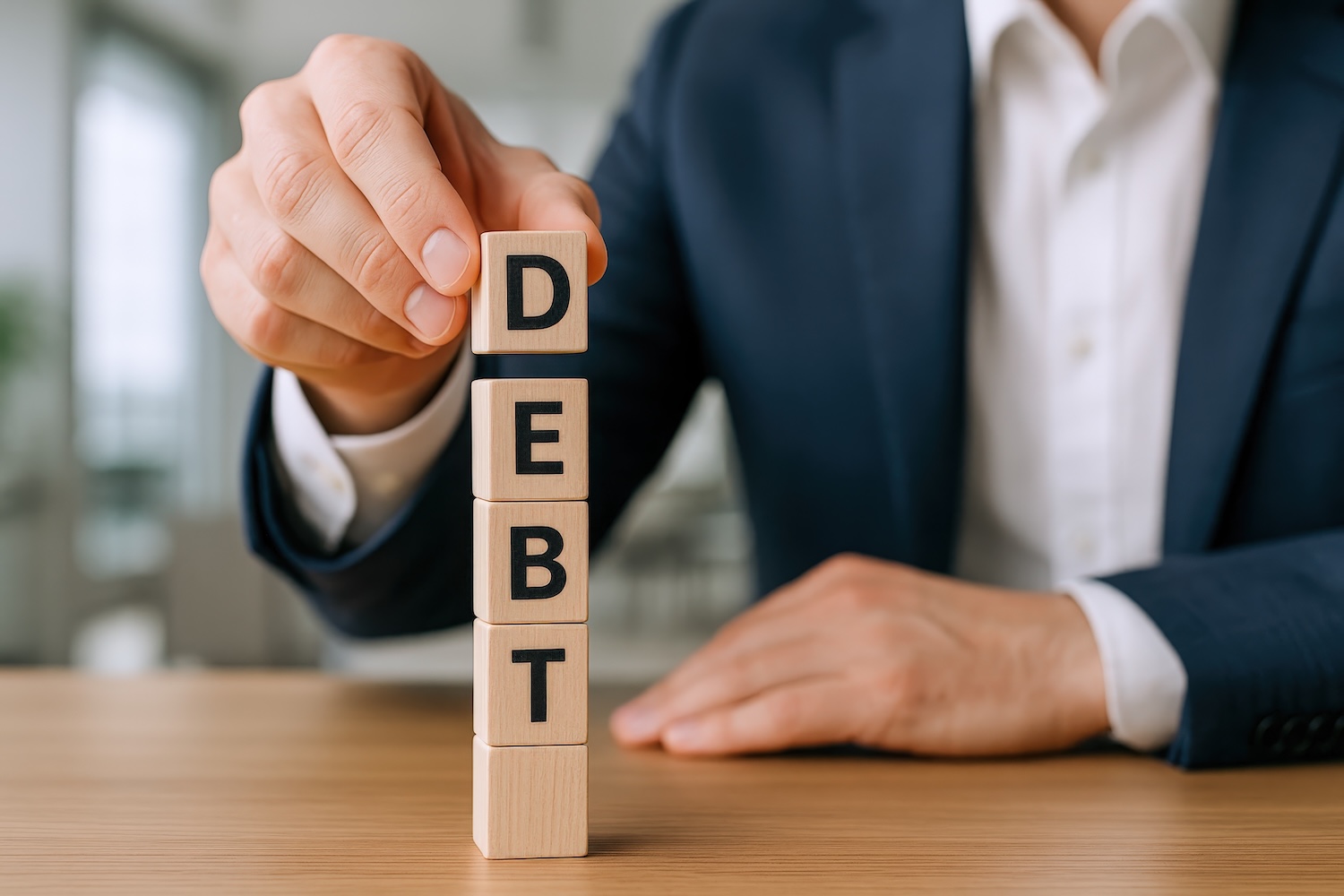
A businessman stacking cubes spelling Debt to represent 'business debt help'

What happens if I can't pay my utility bill debt?

If you fall behind on utility payments, suppliers will typically follow a set process to recover what’s owed.

Reminder notices: Your supplier will contact you by letter, email or phone, asking you to bring your account up to date. Engaging at this stage gives you the best chance of agreeing a payment plan directly with your supplier.

Formal debt notice: If arrears remain unresolved, you’ll receive a formal notice setting out what you owe and giving you a deadline to respond before further action is taken.

Repayment plan or prepayment meter: At this stage, your supplier may propose a structured repayment arrangement or, for energy customers, a prepayment meter to recover arrears alongside ongoing usage costs.

Debt collection referral: If no arrangement is reached, your account may be passed to a debt collection agency or handled by the supplier’s own recovery team. Contact is likely to increase at this stage.

County Court Judgment: If the debt remains unresolved, the supplier or debt collector can apply to court for a CCJ ordering repayment. A CCJ will appear on your credit file for six years.

Disconnection or further enforcement: For energy suppliers, disconnection is a last resort and subject to strict rules, particularly for vulnerable customers. Water companies can pursue enforcement through the courts.

Contacting your supplier early, before the situation escalates, gives you the most options. Ignoring notices makes it harder to reach a manageable arrangement and increases the risk of court action.

Can you write off utility bill debt?

If you haven’t made a payment or acknowledged the debt in writing for six years, it may become statute-barred. This means the supplier can no longer take you to court to recover it, though the debt itself doesn’t legally disappear and they can still contact you about it.

For most people dealing with utility bill arrears alongside other debts, waiting six years isn’t a realistic option. A formal debt solution is likely to offer a clearer and more manageable route forward.

Depending on your circumstances, a formal debt solution could write off some or all of what you owe.

Debt Solutions For Utility Bill Arrears

Individual Voluntary Arrangement (IVA)

An IVA is a formal, legally binding agreement set up and supervised by a licensed Insolvency Practitioner. Your Insolvency Practitioner will assess your income, essential living costs and total debts, then set one monthly payment based on what you can genuinely afford.

Your Insolvency Practitioner will include utility bill arrears in the arrangement alongside any other unsecured debts you have, such as credit cards, personal loans, and overdrafts. If you’re looking for help with an IVA for rent arrears and utility bills, both can be included in the arrangement, though your ongoing rent payments will need to continue to be met separately.

Once your IVA is approved:

  • All included creditors must stop contacting you
  • Interest and charges are frozen
  • You make one affordable monthly payment for the duration of the arrangement
  • Any remaining qualifying debt is written off on completion**

Most people repay only a portion of what they owe through an IVA. A debt write-off of between 25% and 73% is realistic in many cases*, depending on individual circumstances and creditor approval.

An IVA typically runs for five years. If you own a property and your share of the equity, based on 85% of its value, is more than £10,000, the arrangement will run for 6 years instead.

Check if You Qualify for an IVA

Debt Relief Order (DRO)

A DRO may be suitable if your total unsecured debts are below £30,000, you have little disposable income after essential costs and your assets are below the permitted limit. Utility bill arrears can be included in a DRO.

If you qualify, your included debts are frozen for 12 months. Creditors can’t chase you for payment or add interest during this time. If your financial situation hasn’t improved by the end of the 12-month period, the included debts are written off.

DROs are available in England, Wales and Northern Ireland.

Learn More

Debt Management Plan (DMP)

A DMP is an informal arrangement where you make reduced monthly payments to your creditors based on what you can afford. It can ease short-term pressure, but it offers no legal protection. Utility suppliers don’t have to agree to a DMP and can continue to add interest and contact you about the debt.

Learn More

Bankruptcy

Bankruptcy can write off utility bill arrears, along with other unsecured debts, usually within 12 months. Once declared bankrupt, creditor contact must stop and included debts are written off when the bankruptcy period ends.

However, bankruptcy comes with significant consequences. Assets including savings, vehicles, or property may be sold, and you may need to make payments for up to three years if you have spare income. It’s recorded on your credit file for six years and can affect employment in certain roles. It’s generally considered only when other debt solutions aren’t suitable.

Learn More

Breathing Space

The Breathing Space scheme gives you 60 days of protection from creditor contact while you explore longer-term options. During this time, utility suppliers must stop chasing payment and can’t add interest or charges. This can give you the time and space to speak to an Insolvency Practitioner and assess if a formal debt solution is right for your situation.

Learn More

Tips for Dealing with Utility Bill Arrears

Check Your Meter Readings and Tariff

Estimated bills can leave you with a larger balance than expected when your supplier takes an actual reading. Submit regular meter readings to make sure your bills accurately reflect your energy use. It’s also worth checking if you’re on the most suitable tariff for your household, as switching can reduce ongoing costs even while dealing with arrears (switching fees apply).

Look Into Hardship Funds and Grants

Most major energy suppliers operate a hardship fund or trust fund that can help customers clear arrears in certain circumstances. The Warm Home Discount and Cold Weather Payment schemes may also be available depending on your situation. These won’t resolve larger debt problems on their own, but they can reduce what you owe and ease short-term pressure.

Consider a Water Meter

If your household uses less water than the average for your property size, switching to a water meter could reduce your ongoing bills. This won’t clear existing arrears, but lower ongoing costs can make it easier to keep up with a repayment arrangement.

Prioritise Utility Bills Over Non-Priority Debts

Utility arrears carry more serious short-term consequences than non-priority debts like credit cards or catalogues. If money is tight, make sure utility payments are covered before non-priority creditors. This doesn’t mean ignoring other debts, but managing the order in which you allocate available funds matters.

Get Professional Debt Advice

If utility arrears are part of a wider picture of debt that’s becoming difficult to manage, speaking to a debt consultant or an Insolvency Practitioner is the fastest way to get help identifying the available options. The sooner you get a clear picture of where you stand, the more options you’re likely to have.

Struggling with utility bill arrears? Talk to NDH Financial

When utility arrears build up alongside other debts, it can quickly feel like there’s no easy way forward. If that’s where you are, getting a clear picture of your options early makes a real difference.

NDH Financial is a licensed Insolvency Practitioner firm. Our debt consultants will review your income, essential living costs and utility arrears, along with any other debts you have. They’ll help you find the right option for your situation and explain what each one involves, with no pressure or obligation to proceed.

If an IVA is suitable, your utility bill arrears can be included alongside your other unsecured debts, with a fixed monthly contribution based on your disposable income and a clear end date.

The consultation is confidential and focused on practical next steps.

Have More Questions? Our IVA Learning Hub Can Help

We know you might have questions and that's fine. We can answer most of those on our call.

But we've also built our learning hub so that you can learn more about an IVA and see if one is right for you.

Click below to check it out.