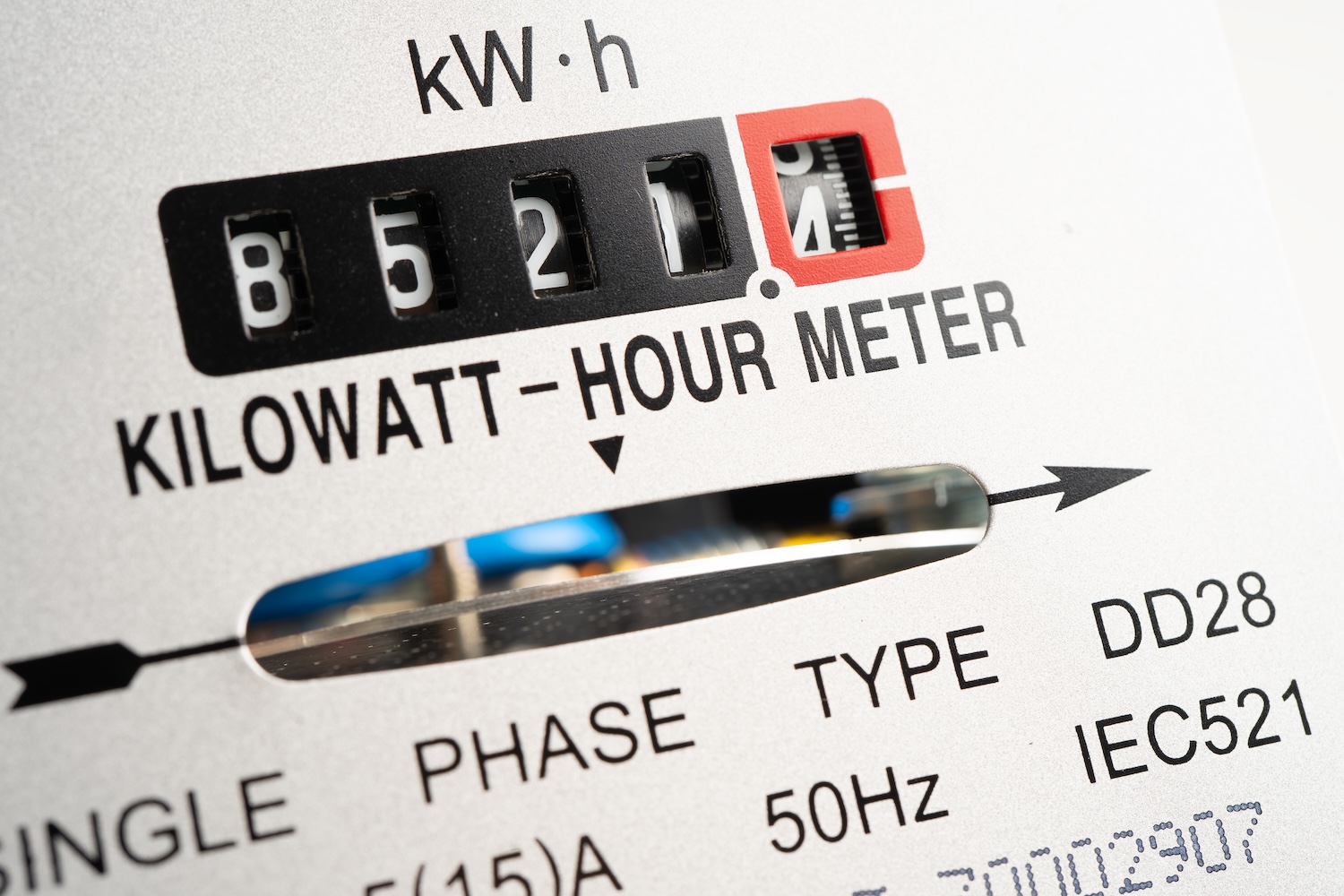
Electricity meter reading indicating amount of energy bill debt

Energy Bill Debt

Rising energy costs have left many households across England, Wales and Northern Ireland struggling to keep up with their gas and electricity bills. What starts as a small shortfall can quickly become a significant debt, with charges and arrears building up faster than you can repay them.

At NDH Financial, we’re personal insolvency specialists, with our own licensed Insolvency Practitioner in-house. We help people understand their options when dealing with energy bill debt and find lasting solutions that provide real protection from creditor pressure.

If energy bill debt is one of several debts you’re juggling, an Individual Voluntary Arrangement (IVA) could allow you to combine your debts into one affordable monthly payment and repay what you can over 5-6 years. Any remaining qualifying debt is then written off**.

What is energy bill debt?

This type of debt is money you owe to your gas or electricity supplier for energy you’ve already used but haven’t been able to pay for. It builds up when you miss bill payments, fall behind on a payment plan, or find that your direct debit hasn’t been covering your actual usage.

Unlike payday loan, credit card or BNPL debt, energy arrears are classed as a priority debt. This means your energy supplier has stronger powers to recover what you owe compared to unsecured creditors, including the ability to install a prepayment meter or, in serious cases, disconnect your supply. Because of this, it’s important to address energy bill debt as early as possible.

Energy bill debt doesn’t just mean owing money on your current account. It can also include arrears carried over from a previous address, debt from a supplier that has since ceased trading, or balances you owe following a smart meter review that found your payments had fallen short of your actual usage.

Causes of Energy Bill Debt

These arrears rarely appear overnight. It usually builds gradually, often without the household fully realising how far behind they’ve fallen.

Direct Debit Underpayments

Most energy suppliers estimate your annual usage and divide it into fixed monthly direct debits. If that estimate is too low, or if energy prices rise during the year, your payments won’t cover what you’re actually using.

The shortfall builds quietly in the background until your supplier carries out an annual review and presents you with a large balance to clear. For households already managing on a tight budget, finding the money to pay your bill in one go can be difficult.

The Energy Price Cap and Tariff Changes

The Ofgem energy price cap limits the unit rate and standing charge your supplier can apply, but it doesn’t cap your total bill. If your household uses more energy than average, or if the cap rises between quarters, your bills can increase significantly even while staying within the regulations. Households that set up direct debits before a cap rise and haven’t adjusted them are particularly vulnerable to accumulating arrears without realising it.

Supplier Collapse & Account Transfers

When an energy supplier fails, Ofgem appoints a new supplier to take over affected accounts. Customers are transferred automatically, but outstanding balances owed to the failed supplier can create confusion about what is still owed and to who. Some households find themselves chased for arrears they didn’t know existed, or face disputes about the balance carried across to the new supplier.

Standing Charges Accumulating on Inactive Accounts

Even when you’re using very little energy, or topping up a prepayment meter with small amounts, standing charges continue to be applied daily. On accounts where payments have fallen behind, standing charges can quietly add to the outstanding balance even during periods of low consumption. Households that take energy saving steps to reduce consumption can still see arrears grow because the standing charge remains constant regardless of usage.

Changes in Circumstances

A loss of income, reduced working hours, illness, relationship breakdown or the arrival of a new dependent can all leave you unable to pay your energy bills at a level that was previously manageable. Unlike some other debts, you can’t simply stop using gas or electricity, so arrears accumulate even when there’s no money available to pay. The longer the change in circumstances persists, the more difficult it becomes to clear the arrears while meeting ongoing bills.

Disputed Meter Readings and Billing Errors

Inaccurate meter readings, delayed smart meter data, or billing errors can result in unexpected charges appearing on your account. When a supplier conducts a meter review or receives the first accurate smart meter reading after a period of estimated billing, customers may receive a retrospective bill covering months or years of underpayment. Disputing these charges can take time, and in the meantime, the balance remains on your account.

Will energy bill debt affect my credit score?

Owing money for energy can affect your credit score, though the way it appears on your credit file differs slightly from unsecured credit products like loans or credit cards.

Not all energy suppliers routinely report payment data to credit reference agencies. However, if your account falls into arrears and is passed to a debt collection agency, or if your supplier takes court action to recover what you owe, that activity will appear on your credit file regardless of which supplier is involved.

Falling behind on your bills can harm your credit score in the following ways:

  • Arrears passed to a debt collection agency will typically be registered as a default on your credit file
  • A County Court Judgment obtained by a supplier or debt collector will appear on your credit file for six years
  • If your account is sold to a debt purchaser, that transaction and any subsequent collection activity will show on your file
  • If you fall behind on multiple energy bills (such as from accounts at different properties), it adds up to a much bigger hit to your credit

If your energy company goes bust (sometimes referred to as ‘supplier collapse’), your payment records might get messy during the move to a new supplier. Check your credit reports with Experian, Equifax and TransUnion to make sure any debts are reported correctly.

Negative information remains on your credit file for six years from the date of the default or missed payment, even if the debt is cleared in full. Addressing the underlying debt through a formal solution sooner rather than later means the six-year recovery period starts earlier.

Get in touch today

NDH Financial can help free you from the shackles of your debt.

Call us on 0800 002 9051 or apply below.

If you’re an existing client, please call us on 0800 002 9061.
A businessman stacking cubes spelling Debt to represent 'business debt help'

What happens if I can't pay my energy bill debt?

Energy suppliers follow a set process when payments fall behind. Knowing what to expect at each stage can help you respond at the right time and keep more options open.

Reminder notices: Your supplier will ask you to pay. Contact them immediately to agree on a payment plan while you have the most options.

Formal debt notice: You’ll get an official letter with a firm deadline. Ignoring this makes it harder to stop the process.

Repayment plan: Suppliers must offer a plan you can actually afford. If you are on benefits or a low income, ask for extra help.

Prepayment meter: If you don’t agree to a plan, the supplier may force you onto a pay-as-you-go meter to automatically claw back the debt.

Debt collection: Your debt may be sold to a collection agency. This usually means more phone calls and a negative mark on your credit file.

Court action (CCJ): A supplier can take you to court for a County Court Judgment. This stays on your credit record for six years.

Disconnection: A last resort. It is very rare and usually forbidden if you are elderly, have young children, or are vulnerable. Sign up for your supplier’s Priority Services Register for extra protection.

Engaging with your supplier at the earliest opportunity gives you the most control over the outcome. The longer arrears go unaddressed, the fewer options you have to resolve them without formal action.

Can you write off energy bill debt?

It’s possible to clear these debts, but they won’t disappear on their own. You’ll need to take deliberate action, and the right route depends on your wider financial situation.

If you haven’t made a payment or acknowledged an energy debt in writing for six years, it may become statute-barred. At that point, the supplier can no longer take you to court to recover it. The debt itself doesn’t legally disappear and the supplier can still contact you about it, but their enforcement options are significantly reduced. For most people, waiting 6 years is neither realistic nor practical.

The more effective route is a formal debt solution. Although these are classed as priority debts, the arrears can be included in certain formal debt solutions alongside unsecured debts. This means your energy bill debt doesn’t have to be dealt with separately from the rest of your debts.

Debt Solutions for Energy Bill Debt

Your arrears don’t have to be dealt with in isolation. If they’ve built up alongside other debts, a formal debt solution can bring everything together and give you a clear, structured way forward.

Individual Voluntary Arrangement (IVA)

An IVA is a legally binding arrangement between you and your creditors that fixes your monthly payments at a level based on what you can realistically afford, after your essential living costs have been accounted for. It’s set up and supervised throughout by a licensed Insolvency Practitioner.

Although classed as a priority debt, arrears owed to your energy supplier can be included in an IVA alongside other qualifying debts. This means your supplier becomes a creditor within the arrangement rather than a separate pressure point you have to manage on your own. From the point of approval:

  • Your energy supplier must stop all contact regarding the included arrears
  • No further interest or charges can be added to the debt
  • You make one monthly contribution, divided between your creditors by your Insolvency Practitioner
  • Whatever qualifying debt remains at the end of the arrangement is written off**

To be considered for an IVA, you’ll generally need at least £7,000 in unsecured debt, a regular income and enough disposable income each month to make contributions.

Check if You Qualify for an IVA

Debt Relief Order (DRO)

A DRO is designed for people who have no realistic means of repaying what they owe. If energy arrears have built up because income simply isn’t covering essential household costs, and there’s little prospect of that changing, a DRO can provide a structured resolution.

Once approved, your energy supplier and any other included creditors are prevented from chasing you for payment for 12 months. If your financial position hasn’t changed by the end of that period, the included debts are written off in full.

To qualify, your total unsecured debts must be under £30,000, your assets must fall within the permitted limits and you must have very little disposable income after essentials are covered. DROs are available in England, Wales and Northern Ireland and are free to apply for.

Learn More

Debt Management Plan (DMP)

A DMP lets you make reduced payments to your creditors each month based on what you can afford. For energy bill debt specifically, it’s worth understanding the limits of this option. Energy suppliers are under no legal obligation to agree to a DMP, freeze standing charges or halt their own recovery process while a plan is in place. Arrears can continue to grow, and the supplier can still pursue a prepayment meter or escalate to debt collection even if you’re making DMP payments.

A DMP tends to work best where financial difficulties are short-term and where creditors are willing to cooperate.

Learn More

Bankruptcy

Where energy arrears are part of a broader debt situation with no viable repayment route, bankruptcy can bring the matter to a close. Debts included in the bankruptcy are written off when the bankruptcy period ends (usually 12 months). During that time, your energy supplier must stop pursuing the arrears included in the bankruptcy.

It’s worth noting that energy suppliers can ask for a security deposit before providing ongoing supply to someone who is bankrupt, as the arrears will have been included in the bankruptcy and the supplier has no ongoing claim on them. Bankruptcy also has wider consequences, including potential asset realisation, a possible income payments arrangement lasting up to three years and a six-year mark on your credit file. It is generally considered only where other options aren’t viable.

Learn More

Breathing Space

If you need time to properly assess your options without enforcement pressure, the Breathing Space scheme provides 60 days of legal protection. During this period, your energy supplier can’t pursue the arrears, add interest or charges, install a prepayment meter against your will, or disconnect your supply. This pause gives you the time to speak to a debt consultant or an Insolvency Practitioner and understand which formal solution fits your full financial picture.

Learn More

Tips for Dealing with Energy Bill Debt

Taking practical steps as soon as possible gives you more options and prevents the debt from growing further.

Contact Your Supplier Before the Debt Escalates

Energy suppliers are required by Ofgem to work with you before taking enforcement action, but that protection works best when you engage early. If you contact your supplier as soon as you realise you’re struggling, you’re far more likely to agree a manageable repayment plan before a formal notice is issued or a prepayment meter is installed. Most suppliers have dedicated hardship teams whose job it is to find a workable arrangement.

Apply for Your Supplier's Hardship Fund

Most major energy suppliers operate a customer hardship fund, support fund, or charitable trust that can provide a one-off grant to help clear arrears for customers in genuine financial difficulty. Eligibility criteria vary by supplier, and funds are limited, but it’s worth applying directly to your supplier to find out what’s available. A successful application won’t resolve wider debt problems, but it can reduce what you owe and make an ongoing repayment plan more manageable.

Check If You Qualify for Government Energy Support

The Warm Home Discount provides an annual reduction on electricity bills for eligible low-income households. The Cold Weather Payment provides additional support during periods of severe cold weather for those receiving certain benefits. If you haven’t already claimed support you’re entitled to, doing so can reduce your ongoing bills and free up income to address existing arrears. 

If you’re receiving certain qualifying benefits, the Fuel Direct scheme may also allow deductions to be taken directly from your payments to cover energy costs, removing the need to manage those payments yourself.

Submit Regular Meter Readings

Suppliers that rely on estimated readings can significantly under- or overbill you, leading to a large balance appearing at your annual review with little warning. Submitting a meter reading every month takes a few minutes and keeps your account accurate.

If you have a smart meter that isn’t sending readings automatically, contact your supplier to get it reconnected to the network. Tracking your consumption accurately also makes it easier to identify where you could save energy and reduce what you’re spending going forward.

Register on the Priority Services Register

If you or anyone in your household is elderly, disabled, has a serious medical condition or depends on energy-powered medical equipment, you can register on your supplier’s Priority Services Register. This provides additional protections, including advance notice before any supply interruption, priority reconnection if supply is interrupted, and extra safeguards around prepayment meter installation. Registration is free and you can apply directly through your energy supplier.

Get Professional Debt Advice If Energy Debt Is Part of a Bigger Picture

If energy arrears are sitting alongside other debts that are becoming difficult to manage, the sooner you get help from a debt consultant or an Insolvency Practitioner, the more options you’re likely to have. Energy arrears don’t have to be resolved separately from the rest of your debts, and a formal solution may allow you to bring everything together into one structured arrangement.

Struggling with Energy Bill Debt? Talk to NDH Financial

Energy bill debt can feel more urgent than other debts because of the threat to your supply, but it doesn’t have to be dealt with in isolation or under that kind of pressure.

Our debt consultants will look at your full financial picture, including your energy arrears, any other debts you’re carrying and your current income and help you understand what options are open to you.

If a formal solution is suitable, your energy bill debt can be brought into it alongside everything else you owe, giving you one structured arrangement and a clear endpoint, rather than separate battles with separate creditors.

Everything is handled confidentially, with no obligation to proceed.

Have More Questions? Our IVA Learning Hub Can Help

We know you might have questions and that's fine. We can answer most of those on our call.

But we've also built our learning hub so that you can learn more about an IVA and see if one is right for you.

Click below to check it out.