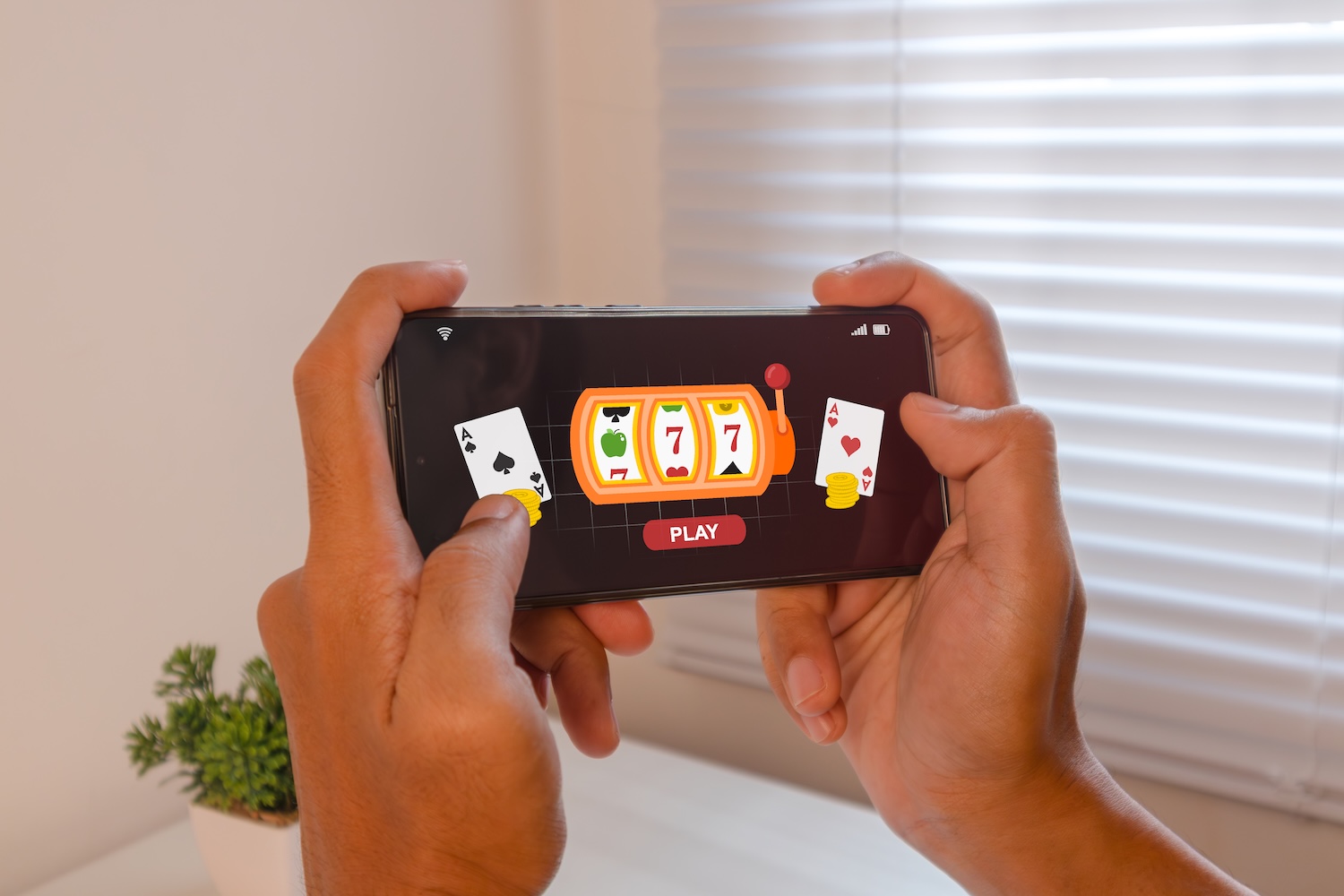
Man playing online casino gambling on a mobile phone to represent Gambling Debt Help

Gambling Debt Help

Online betting, casino games and gambling at the racecourse can reach a point where control is gone. Bets are placed without planning, losses are chased and money leaves your account through a phone or watch before there’s time to think. Gambling starts to dictate decisions, while overdrafts grow, payments are missed, and debt builds across multiple accounts.

At NDH Financial, we provide gambling debt help for people across England, Wales and Northern Ireland. We’re licensed insolvency practitioners with our own Insolvency Practitioner in-house, and we specialise in Individual Voluntary Arrangements (IVAs). Our practitioner has over 15 years’ experience supporting people with serious and persistent debt problems.

An IVA can bring structure and control back by setting one affordable monthly payment, stopping creditor contact, freezing interest and charges, and giving you a clear end date. After 5 or 6 years, any remaining qualifying unsecured debt is written off**.

What is gambling debt?

Gambling debt usually isn’t owed to a bookmaker or casino. It builds when losses are covered using other forms of borrowing over time. The debt shows up as everyday unsecured credit, often spread across several lenders rather than in one place.

Because of this, gambling debt can be hard to pin down. Bank statements may show overdrafts, loans or credit balances, without clearly linking them back to gambling activity. This can make the scale of the problem less obvious until repayments become difficult to manage.

Gambling debt is classed as unsecured, non-priority debt. It isn’t secured against your home or another asset, but lenders can still add interest, pass accounts to debt collectors, or take legal action if payments are missed. When balances rise across multiple accounts, managing the debt alongside day-to-day living costs can quickly become unworkable.

Common Ways Gambling Debt Builds Up

Overdrafts

Overdrafts are often used to keep gambling going when there’s no money left in the account. Fees and interest can apply daily, meaning the balance can grow even when no new spending happens.

Personal Loans

Loans are sometimes taken out to cover losses or try to regain control. These come with fixed monthly repayments, which can become hard to maintain once gambling continues.

Credit Cards & Cash Advances

Credit cards are often used indirectly. This might involve shifting balances, freeing up bank funds, or using cards for everyday spending so cash can be used for gambling. High interest means balances reduce slowly. Some people withdraw cash using a credit card to fund problem gambling. Cash advances usually attract immediate interest and extra charges, making them one of the most expensive forms of borrowing.

Payday Loans & Short-Term Credit

Short-term lenders are sometimes used when other options run out. These loans come with high costs and tight repayment terms, adding pressure quickly.

Buy Now, Pay Later Accounts

BNPL is often used for essentials, leaving income available for a gambling habit. This can spread debt across more accounts and delay the point where the full picture is clear.

Borrowing From Family or Friends

Money borrowed informally can feel easier at the time, but it can create strain and ongoing pressure to repay.

Selling Personal Items

Belongings may be sold or pawned to raise money quickly, often without solving the underlying problem.

Get in touch today

NDH Financial can help free you from the shackles of your debt.

Call us on 0800 002 9051 or apply below.

If you’re an existing client, please call us on 0800 002 9061.

Individual Voluntary Arrangement (IVA)

Will gambling debt affect my credit score?

Online gambling debt usually comes from unsecured credit, like overdrafts, loans or credit cards, and it affects your credit file in the same way as any other debt.

If payments are missed or reduced, lenders may record arrears, defaults, or pass the account to debt collectors. In some cases, a County Court Judgment (CCJ) can be applied for. These markers remain on your credit file for up to six years and can make it harder to access credit, mortgages, or even mobile phone contracts.

What happens if I can’t pay back my gambling debt?

If you fall behind on repaying gambling debts, your creditors will usually follow these stages:

Reminder letters and calls – Lenders contact you to bring missed payments up to date. Interest and charges may continue to be added, increasing the balance.

Formal warning or default notice – You may receive a notice giving you a set period to clear the arrears or agree a payment arrangement before further action is taken.

Debt collection – If the account remains unpaid, it may be passed to a debt collection agency or sold to a debt purchaser. Contact often increases at this stage.

Court action – If no agreement is reached, the creditor may apply for a County Court Judgment (CCJ), ordering you to repay the debt.

Bailiff action – If a CCJ is granted and payments are not kept up, enforcement action may follow. This can include bailiffs being instructed, depending on the type of debt.

Taking action sooner usually leaves you with more ways forward. Leaving letters or calls unanswered can narrow your options and make the situation harder to resolve later.

Can you write off gambling debt?

Yes. Gambling debt can be written off through formal debt solutions if the debts are unsecured and meet the criteria. It does not matter that the debt came from gambling. What matters is the type of debt and if you can afford a realistic repayment.

Individual Voluntary Arrangement (IVA)

An IVA is a formal, legally binding agreement set up by a licensed Insolvency Practitioner. Your Insolvency Practitioner will work with you to look at your income, essential living costs, and debts, then set one monthly payment you can afford.

Payments usually last 5 or 6 years. Interest and charges stop, and creditors must stop contacting you. Many people with gambling debt repay only part of what they owe. A debt write-off of between 25% and 73% is realistic in many cases, depending on individual circumstances and creditor approval*.

Once the IVA is completed, any remaining qualifying unsecured debt is written off**.

Check if You Qualify for an IVA

Debt Relief Order (DRO)

A Debt Relief Order may be suitable if gambling debt has left you with very little spare income and no realistic way to repay what you owe. To qualify, your total unsecured debts must be below the current limit (less than £50,000), you must have very low disposable income after essential costs, and you must not own assets over the allowed value (under £2,000).

If gambling debt is included in a DRO, you make no payments towards it for 12 months. During this time, creditors cannot chase you, add interest, or take legal action. Your finances are reviewed during the year, and if your situation does not improve, the debt is written off at the end of the 12-month period.

A DRO is usually more suitable where income is unstable or very limited, and there is no realistic ability to maintain regular repayments.

Learn More

Debt Management Plan (DMP)

A Debt Management Plan is an informal arrangement where you make reduced monthly payments based on what you can afford. It can help ease short-term pressure, but it does not stop interest automatically, and creditors do not have to agree.

With gambling debt, a DMP can be difficult. Balances may continue to grow, contact from creditors can continue, and there is no fixed end date. You repay everything you owe in full, which can take many years if interest is still being added.

DMPs are generally less suitable where gambling debt is long-term or has already reached an unmanageable level.

Learn More

Bankruptcy

Bankruptcy and gambling debts are closely linked, as bankruptcy can clear most gambling-related unsecured debts, usually within 12 months. Once you are declared bankrupt, creditor contact must stop and included debts are written off when the bankruptcy period ends.

However, bankruptcy comes with strict rules. Assets like savings, vehicles, or property may be sold, and you may have to make payments for up to three years if you have spare income. Your financial affairs are closely controlled, and bankruptcy is recorded on your credit file for six years.

Because of the impact it can have on housing, employment, and finances, bankruptcy is usually considered only when other solutions are not suitable.

Learn More

Will I be allowed to gamble if I start a debt solution?

Debt solutions are built around realistic and responsible budgeting. This means gambling would not be allowed within your agreed monthly budget.

If you enter an IVA, your Insolvency Practitioner will work with you to set spending limits that cover essential living costs and your IVA payment. Gambling is not treated as an allowable expense, and continuing to gamble could put the arrangement at risk.

The same applies to other formal solutions. A DRO and bankruptcy both expect you to avoid behaviour that could worsen your financial position. Gambling during these solutions may be seen as failing to manage your finances properly and could lead to problems.

If gambling has been difficult to control, putting financial and practical barriers in place to block gambling alongside a debt solution is often necessary to make the arrangement work.

Tips for Dealing With Gambling Debt

Dealing with a gambling addiction usually involves more than sorting the finances. Getting help with gambling and putting safeguards in place can make a real difference.

Get Support

Speaking to your GP or pharmacist is a good first step. They can help you access local services, specialist gambling organisations or helplines like GamCare or Gamblers Anonymous. Addressing the behaviour alongside the debt improves the chances of long-term stability.

Be Honest with People You Trust

Telling a partner, friend or family member what’s happening can ease the pressure of dealing with everything alone. Like any addiction, secrecy often allows debt to grow unchecked.

Put Barriers in Place

Use bank gambling blocks, self-exclusion schemes, and gambling website or app restrictions to limit access to betting sites and casinos. These tools help reduce impulsive spending or gambling transactions.

Limit Access to Credit

Speak to your bank about help with gambling. They can help you take control of your finances by reducing or cancelling overdrafts and credit facilities. This removes temptation and stops further borrowing while you regain control.

Get Professional Debt Advice

A licensed Insolvency Practitioner can work with you to assess your situation properly and put a formal plan in place if needed. This brings structure, protection, and a clear way forward through your financial difficulties.

Struggling With Gambling Debt? Contact NDH Financial Today

If gambling debt is affecting your finances and you’re unsure what to do next, NDH Financial can help. We’re personal insolvency specialists with our own licensed Insolvency Practitioner in-house, and we work with people across England, Wales and Northern Ireland who are dealing with serious debt problems.

Our debt consultants will look at your situation honestly and help you understand whether an IVA, or another debt solution, is suitable for you. We’ll work with you to build a realistic budget that reflects your living costs and help you understand the most appropriate way to deal with your debts. Everything is explained clearly, with no pressure and no obligation to proceed.

Don’t let gambling debt continue to control your finances. Contact NDH Financial today for a confidential consultation.

Have More Questions? Our IVA Learning Hub Can Help

We know you might have questions and that's fine. We can answer most of those on our call.

But we've also built our learning hub so that you can learn more about an IVA and see if one is right for you.

Click below to check it out.