
Smiling woman coping with Buy Now Pay Later Debt

Help With Buy Now Pay Later Debt

Buy now, pay later sounds straightforward. There’s no application form, no credit check that shows on your file and nothing that looks or feels like falling into debt. But BNPL behaves like debt regardless. Balances stack up across multiple providers, payments can be missed and late fees kick in. By the time someone realises how much they owe, it can be far more than they expected.

At NDH Financial, we help people across England, Wales and Northern Ireland deal with buy-now-pay-later debt as part of wider financial difficulties. We’re licensed Insolvency Practitioners with over 15 years’ experience helping people find a way forward.

If BNPL arrears are building alongside other unsecured debts, an Individual Voluntary Arrangement (IVA) may help. Your Insolvency Practitioner will work with you to set one affordable monthly payment. BNPL balances can be included, creditor contact stops and any remaining qualifying unsecured debt included in the IVA is written off**.

What is BNPL Debt?

Buy now, pay later is a type of short-term credit that lets you pay for items in instalments, usually interest-free, over a set number of weeks or months. It’s available at checkout with thousands of online and in-store retailers, while BNPL services from providers like Klarna, Clearpay and Laybuy have made it a routine part of how UK consumers shop. According to the FCA’s Financial Lives Survey, 10.9 million adults used BNPL in 2024, or roughly one in five people across the UK.

Unlike a credit card or payday loan, BNPL doesn’t feel like borrowing. There’s no interest warning, no formal credit agreement to sign and no monthly statement reminding you what you owe. But it’s a debt – so there’s still an obligation to repay . When BNPL repayments are missed or balances build across multiple accounts, it can become a serious financial problem.

BNPL debt is classed as unsecured, non-priority debt. Lenders can add late payment fees, refer accounts to debt collectors, or take legal action if payments aren’t kept up. When BNPL balances grow alongside other types of debts, managing everything on a tight budget can quickly feel impossible.

Types of Buy Now Pay Later

Pay in Three or Four Instalments

The most common form of BNPL lets you spread payments across 3 or 4 months, usually with no interest if you pay on time. Providers like Klarna and Clearpay offer this at checkout, where it’s typically approved instantly without a full credit check. It feels like a simple way to spread the cost of a purchase, but with multiple BNPL payments running simultaneously across different accounts, the total monthly commitment can be higher than expected.

Pay Later / Deferred Payment

Some BNPL services let you delay payment for 14 or 30 days after purchase. If the balance isn’t cleared by the deadline, late fees can apply. This type of buy-now-pay-later payment is popular with fashion retailers, where returns are common.

Longer-Term Instalment Plans

Some BNPL companies offer credit spread over a longer period, typically 3 to 12 months. These plans can feel more like a personal loan – and some charge interest, particularly after an initial interest-free period. Failing to clear the balance within the agreed term can result in backdated interest charges being applied to the full original amount.

Retailer Own BNPL Options

Many retailers offer their own buy-now-pay-later payment option at checkout, sometimes through a third-party BNPL company, sometimes through their own credit facility. These products may have different terms and conditions from those of standalone BNPL companies, so it’s worth reading them carefully before agreeing.

Causes of BNPL Debt

Easy Access at Checkout

There’s no application, no waiting, and often no credit check. BNPL appears at the point of purchase, making it easy to commit without considering whether repayments will be affordable.

Using Multiple BNPL Providers

Most users don’t stick to one provider. With each account in a separate app, there’s no single view of what’s owed, making it easy to miss payments without realising it.

Missing the Repayment Window

Interest-free BNPL only stays interest-free if the balance is cleared on time. Miss the deadline and charges can apply, sometimes retrospectively on the full original amount.

Using BNPL When Money is Tight

Some people use BNPL to cover essentials they can’t afford upfront. It provides immediate relief, but the debt still needs repaying, often with fees attached.

Changes in Circumstances

Job loss, illness, or an unexpected expense can make previously manageable repayments unaffordable. With balances spread across multiple accounts, the full picture can take time to emerge.

It Wasn't Treated Like Real Debt

BNPL historically fell outside FCA regulation and the Consumer Credit Act, with no affordability checks required. Without those guardrails, it was easy to borrow more than was affordable, often without recognising it as debt.

Will BNPL debt affect my credit score?

Most BNPL agreements haven’t appeared on credit files because, until recently, providers weren’t required to report them. Under the incoming FCA framework, that’s set to change. BNPL balances are expected to become visible on credit reports, meaning missed payments and defaults will affect your credit score in the same way as any other debt.

When BNPL does appear on your credit file, it can affect your credit score in the following ways:

  • Missing a BNPL payment or paying late can be recorded as a missed or late payment
  • A default may be registered if an account goes unpaid for a sustained period
  • A County Court Judgment (CCJ) can be applied for if the debt remains unresolved
  • High levels of BNPL credit relative to your income can affect affordability assessments for mortgages or other credit

Most negative information stays on your credit file for six years from the date of the missed payment or default, even if the debt is later cleared. The regulatory changes aren’t yet in force, but if you’re currently struggling with BNPL debt, that doesn’t change what’s available to you now.

Get in touch today

NDH Financial can help free you from the shackles of your debt.

Call us on 0800 002 9051 or apply below.

If you’re an existing client, please call us on 0800 002 9061.
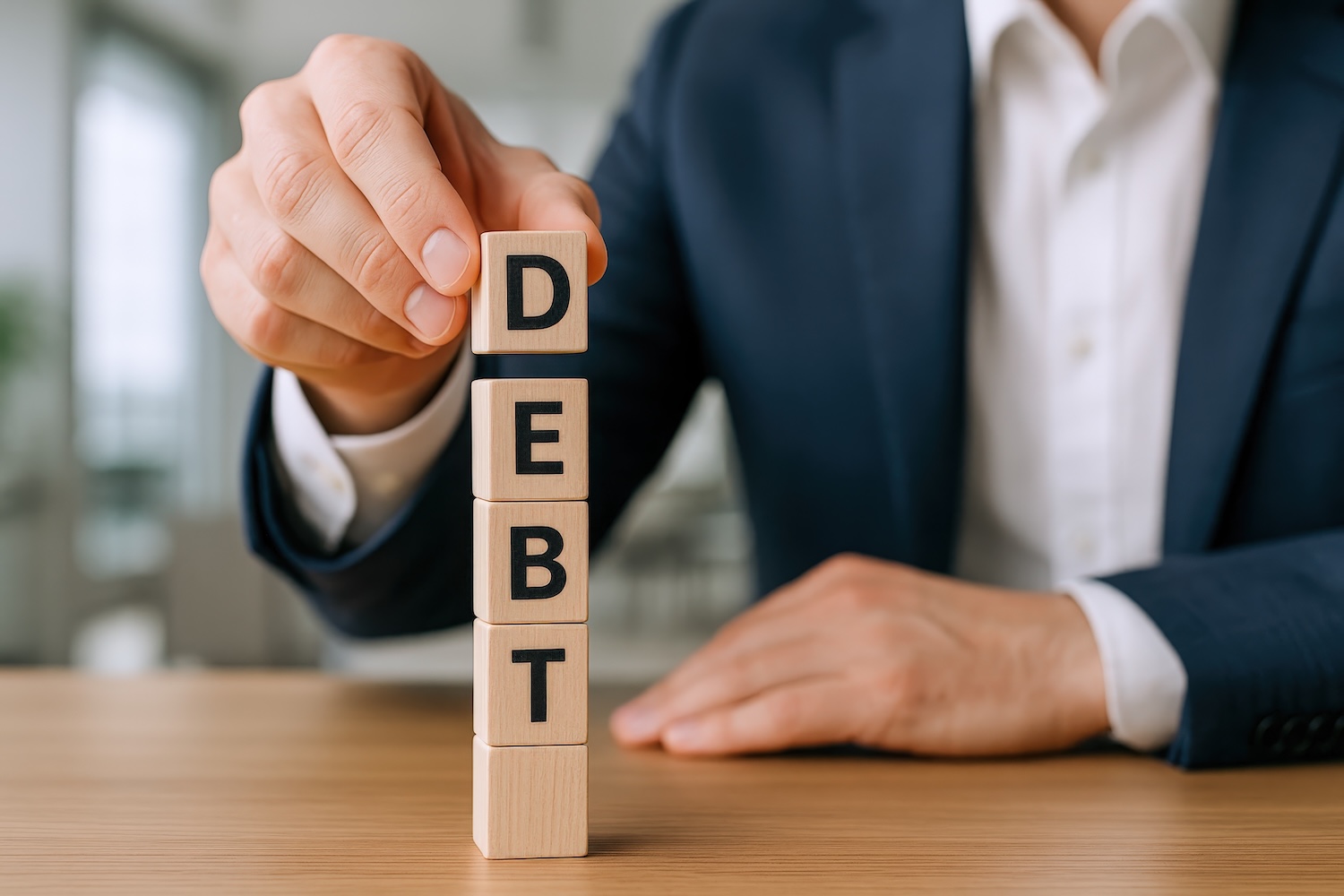
A businessman stacking cubes spelling Debt to represent 'business debt help'

What happens if I can't pay my BNPL debt?

If you miss payments on your BNPL accounts, providers will typically follow a set process to recover what’s owed.

Late payment notification. You’ll receive a reminder that a payment is overdue. A late payment fee is usually added at this stage, increasing the balance.

Account restricted. Further purchases with the BNPL provider may be paused until the outstanding balance is resolved.

Formal notice. You’ll receive a formal letter or notification giving you a set period to pay the arrears or agree a repayment arrangement before further action is taken.

Referred to debt collectors. If the account remains unpaid, it may be passed to a debt collection agency or sold to a debt purchaser. Contact tends to increase at this stage.

Court action. If no agreement is reached, the BNPL company or debt purchaser may apply for a County Court Judgment (CCJ), ordering repayment of the debt.

Bailiff action. If a CCJ is granted and payments aren’t kept up, enforcement action may follow, depending on the type of debt.

Engaging with BNPL providers early gives you the best chance of reaching an arrangement before the situation escalates. Ignoring letters and notifications makes it harder to resolve things later.

Is BNPL really debt?

Buy now pay later debt is classed as non-priority debt, which means it sits behind essential costs like rent or mortgage payments, council tax, utilities and food when it comes to managing your budget.

Can I be taken to court for BNPL debt?

Being a non-priority debt doesn’t mean BNPL debt can be ignored. Providers can still add charges, refer accounts to debt collectors and take court action if payments aren’t kept up. But if money is tight, your essential living costs should always come first.

Can you write off BNPL debt?

BNPL debt doesn’t get written off simply because you can’t pay it back. However, because it’s classed as unsecured debt, it can be included in formal debt solutions that may allow some or all of the balance to be written off.

Individual Voluntary Arrangement (IVA)

An IVA is a formal, legally binding agreement set up and supervised by a licensed Insolvency Practitioner. Your Insolvency Practitioner will look at your income, essential living costs and debts, then set one monthly payment based on what you can genuinely afford.

BNPL debt is unsecured credit, meaning it can be included in an IVA alongside other unsecured debts, such as credit cards, personal loans and overdrafts. If you have Klarna debt, Clearpay debt, PayPal debt or balances with any other pay-later provider, those are included in the arrangement along with everything else. Having BNPL debt alongside other debts is very common and doesn’t affect your eligibility.

Once approved:

  • All BNPL companies and other creditors must stop contacting you
  • Interest and charges are frozen
  • You make one affordable monthly payment based on your circumstances
  • Any remaining qualifying unsecured debt is written off after completion**

Most people repay only part of what they owe through an IVA. A debt write-off of between 25% and 73% is realistic in many cases, depending on individual circumstances and creditor approval*.

Check if You Qualify for an IVA

Debt Relief Order (DRO)

A Debt Relief Order may be suitable if BNPL debt has left you with very little spare income and no realistic way to repay what you owe. To qualify, your total unsecured debts must be below the current limit, you must have very low disposable income after essential costs and you must not own assets with a value above the allowed limit.

BNPL agreements are now included within the scope of a DRO. If eligible, you make no payments towards included debts for 12 months. During this time, creditors can’t chase you, add interest, or take legal action. If your situation doesn’t improve by the end of the 12-month period, the included debts are written off.

DROs are available in England, Wales and Northern Ireland.

Learn More

Debt Management Plan (DMP)

A Debt Management Plan is an informal arrangement where you make reduced monthly payments to your creditors based on what you can afford. It can ease short-term pressure, but it offers no legal protection. BNPL companies don’t have to agree to a DMP, can continue to add interest and still contact you about the debt.

With BNPL debt spread across multiple accounts, a DMP can be difficult to manage if some providers agree and others don’t. It’s generally more suitable for short-term financial difficulty where the total amount of debt is manageable and likely to be repaid in full.

Learn More

Bankruptcy

Bankruptcy can write off BNPL debt alongside other unsecured debts, usually within 12 months. Once you’re declared bankrupt, creditor contact must stop and included debts are written off when the bankruptcy period ends.

However, bankruptcy comes with significant consequences. Assets like savings, vehicles or property may be sold and you may have to make payments for up to three years if you have spare income. Bankruptcy is recorded on your credit file for six years and can affect employment in certain roles.

Because of the impact it can have on your finances and wider life, bankruptcy is usually considered only when other debt solutions aren’t suitable.

Learn More

Breathing Space

The Breathing Space scheme gives you 60 days of protection from creditor contact while you look at longer-term options. During this time, BNPL companies must stop chasing payment and can’t add interest or charges. This can give you time to speak to an Insolvency Practitioner and explore if a formal debt solution is right for your situation.

Learn More

Tips for Dealing With BNPL Debt

Remove BNPL Apps and Accounts

If BNPL repayments are already difficult to keep up with, adding new purchases will make things worse. Delete saved payment details from retailer websites, remove apps from your phone and avoid the option to pay later at checkout until your existing balances are under control.

Note Everything You Owe

Write down every BNPL account you have, including the provider name, outstanding balance, when the next payment’s due – and what happens if you miss it. Many people are surprised by the total when they see it all in one place. Having a clear picture is the starting point for working out what to do next.

Contact BNPL Providers Early

If you’re struggling to afford a BNPL repayment, contact the provider before you miss it. Many BNPL companies will work with you to agree a short-term arrangement. Once a payment is missed and fees are added, the situation becomes harder to resolve.

Prioritise Your Essential Costs

BNPL debt is non-priority debt. If money is tight, make sure rent or mortgage, council tax, utilities and food are covered first. Don’t sacrifice essential payments to keep up with BNPL repayments.

Get Professional Debt Advice

If BNPL debt is part of a wider picture of debt that’s becoming difficult to manage, speaking to a debt consultant or Insolvency Practitioner can help you understand what options are available. The sooner you get a clear picture of where you stand, the more options you’re likely to have.

Struggling With BNPL Debt? Talk to NDH Financial

When buy-now-pay-later balances build alongside other debts, it can quickly become impossible to keep up with repayments. If that’s where you are, getting a clear picture of your options sooner rather than later makes a real difference.

At NDH Financial, we’re a licensed Insolvency Practitioner firm working with people across England, Wales and Northern Ireland who are struggling with debt.

Our debt consultants will review your income, essential living costs and BNPL balances alongside any other debts you have. They’ll explain which options fit your situation and what each one involves. If an IVA is suitable, it can include your BNPL debt and set a single monthly payment you can realistically afford, with a clear end date.

The consultation is confidential, non-obligatory and focused on practical next steps.

Have More Questions? Our IVA Learning Hub Can Help

We know you might have questions and that's fine. We can answer most of those on our call.

But we've also built our learning hub so that you can learn more about an IVA and see if one is right for you.

Click below to check it out.