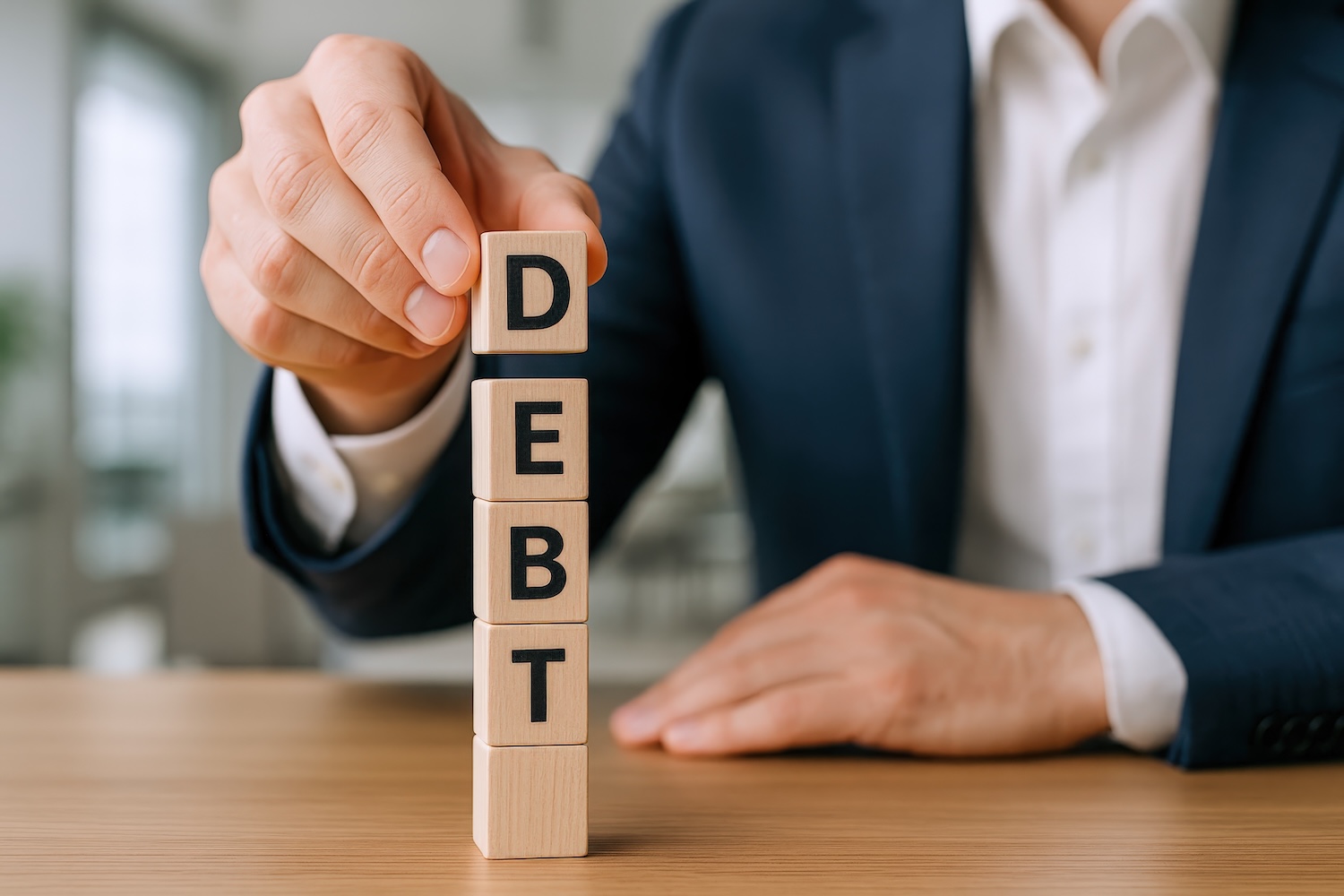
An office with paperwork, a calculator and a sign saying debt to represent 'business debt help'

Business Debt Help

Running a business means juggling a lot at once. Cash flow, suppliers, staff costs, tax deadlines, finance agreements and day-to-day expenses all compete for attention. When income drops, or costs rise, it becomes harder to stay on top of it all. Many business owners and directors don’t realise how much liability they’re carrying until repayments start slipping. Loans, credit cards, tax debts and finance agreements are often taken out in your own name or backed by a personal guarantee, which means the debt doesn’t sit with the business – it sits with you.

At NDH Financial, we provide business debt help for self-employed people and company directors with personal liability across England, Wales and Northern Ireland. We’re licensed insolvency practitioners and specialise in Individual Voluntary Arrangements (IVAs). Our Insolvency Practitioner has over 15 years’ experience and has helped countless people deal with business-related debt.

If business debt collectors are chasing payment, or debt consolidation for business owners has become unmanageable, an IVA provides a formal route forward with legal protection once approved.

What is business debt?

Business debt is money borrowed to start up a self-employed enterprise or business, or keep a company running.

It often builds up over time and can come from several places at once, like credit cards, loans and asset leasing, so people often find themselves juggling multiple repayments, deadlines and lenders at the same time. When cash flow is tight, keeping up with all of them can quickly become unmanageable.

In many cases, these debts are taken out in a director’s or sole trader’s name, or backed by a personal guarantee, which means you remain personally responsible if the business runs into financial difficulties.

Business Debts You Might Be Dealing With

Business Loans & Bank Borrowing

These are loans taken out to fund the business and have fixed monthly repayments. They’re often backed by a personal guarantee, which means you remain responsible if the business can’t repay them.

Business Credit Cards

Credit cards are often used to cover short-term gaps in cash flow or everyday expenses. High interest rates mean balances can grow quickly when only minimum payments are made.

Working Capital & Short-Term Lending

These are short-term funding options designed to support day-to-day trading. They usually come with higher costs and tight repayment schedules, which can put pressure on cash flow.

Invoice Financing & Factoring

This involves borrowing against unpaid invoices to access money sooner. If customers pay late or don’t pay in full, you’re still responsible for the shortfall.

Asset Finance & Leasing

Asset finance allows businesses to spread the cost of vehicles, equipment or machinery. If the asset is sold or returned and doesn’t clear the balance, the remaining debt can still be owed personally.

Business rates arrears

Business rates are a fixed cost linked to your premises, regardless of how well the business is trading. Falling behind can lead to enforcement action by the local authority.

Get in touch today

NDH Financial can help free you from the shackles of your debt.

Call us on 0800 002 9051 or apply below.

If you’re an existing client, please call us on 0800 002 9061.

Individual Voluntary Arrangement (IVA)

Debts to HMRC

HM Revenue & Customs arrears are a common type of debt for self-employed people and company directors. They often build up quietly, then become urgent once payment deadlines are missed. HMRC generally takes further action more quickly than other creditors, meaning they are one of the types of debt that should be addressed first in any debt plan.

HMRC can take a range of actions to recover their money, including:

  • Changing your tax code
  • Sending bailiffs to your business premises to remove assets or to create a Virtual Controlled Goods Agreement
  • Directly deduct the money from your bank account
  • Claim through county court action
  • Apply to make you bankrupt, or wind up the company

Income Tax Debt

Income tax arrears usually come from unpaid self-assessment bills. When profits drop or payments on account are still based on earlier, better years, the amounts due can quickly become unaffordable.

If you are in financial distress and you are unable to pay your income tax debt, you may be able to make monthly repayments – but this is generally only for up to six months. If you still cannot make these repayment terms, you should contact the HMRC Business Payment Support Helpline.

VAT Arrears

VAT arrears arise when VAT collected from customers isn’t available when the return is due. You should submit a budget to HMRC showing that you’re offering everything you can afford to give them. If this is the case, HMRC will usually let you pay in monthly instalments for up to 12 months. However, if you don’t submit a budget, they may well ask you to clear up any outstanding VAT arrears in three months or less.

PAYE & National Insurance

PAYE and National Insurance debts build up when a business can’t keep up with payroll tax payments. HMRC treats these as serious arrears and may take action quickly if they remain unpaid.

How an IVA Can Help With HMRC Debt

Where HMRC debts are personally owed, or you’re personally liable, they can often be included in an IVA. Your Insolvency Practitioner will work with you to assess what can be included, set an affordable monthly payment, and put a formal proposal to HMRC alongside your other creditors. Once approved, HMRC must deal with the debt through the IVA rather than chasing payment directly.

Will business debt affect my credit score?

Business debt can affect your credit score if you’re personally responsible for it. This is common for sole traders and company directors who have taken out borrowing in their own name or signed a personal guarantee.

Missed payments, defaults and arrears on business loans, credit cards or HMRC debts can appear on your personal credit file. Once negative information is recorded, it usually stays on your credit file for six years. This can make it harder to access borrowing in future and may affect things like mortgages, mobile phone contracts and other credit applications.

What happens if I can’t pay my business debts?

If you fall behind on business debt repayments, creditors will usually follow these stages:

Reminder letters and calls – Lenders or HMRC contact you, asking you to bring missed payments up to date.

Formal warning or demand – You may receive a notice giving you a set period to pay the arrears before further action is considered.

Debt collection – The account may be passed to a business debt collector or sold to a debt purchaser, leading to increased contact and pressure.

Court action – If the debt remains unpaid and you’re personally liable, the creditor may apply to court for a County Court Judgment ordering you to pay.

Bailiff action – If a court order is granted and payments aren’t kept up, bailiffs may be instructed to recover the debt. This is common with business rates arrears and some HMRC debts.

Engaging early can make a real difference. Ignoring contact from creditors, debt collectors or HMRC often limits your options and allows the situation to escalate more quickly.

Can you write off business debt?

Yes, it’s possible to write off business debt in certain situations with formal debt solutions. What matters is if the debt is personally owed by you, or backed by a personal guarantee, rather than sitting solely with a limited company.

Individual Voluntary Arrangement (IVA)

An IVA is commonly used where business debts are in your name or personally guaranteed. Your Insolvency Practitioner will work with you to assess your income, outgoings and qualifying unsecured debts, then put a proposal to creditors. Your debts will be combined into a single monthly payment over 5-6 years.

Unlike bankruptcy, an IVA does not automatically stop you from being a company director. Many directors continue working and trading while their IVA is in place, provided they meet any requirements set by their employer, lender or professional body.

Once your IVA is approved:

  • Business lenders and HMRC included in the IVA must stop chasing you for payment
  • Interest and charges on included debts stop building up
  • Your monthly payment is based on what you can realistically afford
  • When the IVA completes, any remaining qualifying unsecured debt is written off**

Many people repay only part of what they owe. A debt write-off of between 25% and 73% is realistic in many cases, depending on your financial circumstances and creditor approval*.

An IVA may be suitable if you owe £7,000 or more in unsecured business debt that you’re personally liable for, have a regular income, and can afford monthly payments after essential costs.

Check if You Qualify for an IVA

Debt Relief Order (DRO)

A DRO may be suitable if you have a low income, minimal assets (under £2,000) and relatively low overall debt (less than £50,000). Some business debts can be included if they’re personally owed and meet the eligibility criteria.

A DRO lasts 12 months. If your financial situation doesn’t improve during that time, the debts included are written off at the end of the order.

A DRO does not ban you from being self-employed or acting as a company director. However, there are limits on what you can earn and the assets you can hold while the DRO is in place. If your income increases or you start earning above the allowed threshold during the 12-month period, the DRO can be cancelled. Because of these limits, DROs tend to suit people whose business activity is very small-scale or has already been reduced.

Learn More

Debt Management Plan (DMP)

A Debt Management Plan allows you to make reduced payments to creditors based on what you can afford. It’s an informal arrangement and does not write off debt.

There are no legal restrictions on being a company director or self-employed while in a DMP. However, because DMPs offer no legal protection, business creditors and HMRC can still take action if they choose to.

For business owners, this uncertainty can make trading difficult, as there’s no guarantee creditors will continue to accept reduced payments or freeze interest.

Learn More

Bankruptcy

Bankruptcy can write off personally owed business debts, usually within 12 months. However, it comes with serious consequences, including potential loss of assets and restrictions on your finances and business activity.

If you’re made bankrupt, you’re legally banned from acting as a company director or being

involved in the management of a limited company while the bankruptcy is in place. This restriction typically lasts 12 months, but it can be extended in some cases.

If you’re self-employed, bankruptcy does not automatically stop you from continuing to trade. However, you must follow strict rules, may lose non-essential business assets, and can face limits that make running a business more difficult.

Because of the impact it can have on both your personal finances and your ability to run a business, bankruptcy is usually considered only when other options aren’t suitable.

Learn More

Breathing Space

The Breathing Space scheme gives you temporary protection from creditor contact for 60 days while you get debt advice. During this time, interest and enforcement action must stop on qualifying debts.

Breathing Space doesn’t write off business debt, but it can provide time to work with an adviser or Insolvency Practitioner to decide if a longer-term solution, like an IVA, is appropriate.

Learn More

What options are there for Limited Companies?

If a limited company is struggling with debt and the director is not personally liable, the debts are dealt with in different ways:

  • Company Voluntary Arrangement (CVA) – A formal agreement that allows a company to repay creditors over time if the business is still viable.
  • Administration – A process where an insolvency practitioner takes control of the company to try to rescue it or achieve a better outcome for creditors.
  • Company liquidation – The closure of the company, where assets are sold, and the business stops trading.

These are company-level solutions and are not personal debt solutions. They do not deal with debts that are personally owed by directors.

Struggling with business debt? Contact NDH Financial Today

If business debt is putting pressure on your finances, getting clear advice can help you understand where you stand and what options are realistic.

At NDH Financial, our licensed Insolvency Practitioner will work with you to review your income, outgoings and business-related debts, and explain whether an IVA or another solution is suitable for your situation. There’s no obligation to proceed, and the focus is on finding a way forward that fits around your work and responsibilities.

If you’re dealing with business debt collectors, HMRC arrears or personal guarantees, you don’t have to keep juggling it alone.

Have More Questions? Our IVA Learning Hub Can Help

We know you might have questions and that's fine. We can answer most of those on our call.

But we've also built our learning hub so that you can learn more about an IVA and see if one is right for you.

Click below to check it out.